 人工智能峰会
-
 Javy Wang
Microsoft (US)
Principal Product Designer
Javy Wang
Microsoft (US)
Principal Product Designer
Javy Wang is a Principal Product Designer at Microsoft, working on Azure cloud and developer tooling experiences, and exploring the intersection of AI, product design, and builder workflows.
With 12+ years of product design experience across Microsoft and IBM, she focuses on translating complex enterprise and AI capabilities into usable product experiences. Her public sharing focuses on generalizable design methods, publicly shareable learnings, and personal AI-building experiments, without disclosing Microsoft confidential information.
Outside of her full-time work, Javy explores designer-led AI prototyping and product-building workflows through personal projects and public writing. Her work discusses how designers can use AI tools to move from concept to prototype, strengthen product judgment, and better collaborate with engineering and product teams.
This session reflects personal experience and publicly shareable methods only. It does not represent Microsoft’s official position and does not disclose Microsoft confidential information.
-
 Chen Ming
China Merchants Bank
Director of FTDesign
Chen Ming
China Merchants Bank
Director of FTDesign
A veteran experience design specialist with over 20 years of industry experience and more than 10 years in design team management. He excels at building and scaling design teams from scratch, empowering business growth through end-to-end design solutions.
By establishing enterprise-level design systems, he has consistently guaranteed consistent design output quality, built highly recognizable brand identity, and drastically cut costs for design and front-end development
Design Philosophy : making design’s commercial value visible and measurable.
-
 Raina Su
Tencent
Tencent Design Ardot Product Manager
Raina Su
Tencent
Tencent Design Ardot Product Manager
The product manager of Tencent's design tool Ardot. She joined Tencent in 2011. She has held positions in Tencent's CDC, ISUX, and Tencent Cloud Design Center. She has been deeply involved in enterprise-level product design for industrial Internet, and is responsible for experience construction in fields such as Tencent Cloud Finance, Energy, and AI. From an interaction designer to the product manager of design tools, she is currently exploring: What should the tools of designers look like when AI can directly generate interfaces?
-
 Liu Xin
Kuaishou
Senior AI Product Designer
Liu Xin
Kuaishou
Senior AI Product Designer
I am the Head of Commercial Experience Design at Kuaishou, specializing in exploring how experience design drives sustainable business growth. I lead the team responsible for the end-to-end experience planning and implementation of Kuaishou's commercial product matrix (such as Magnetic Engine), and have spearheaded experience upgrades for several key businesses and the platform's development from scratch. We firmly believe in "experience is growth" and excel at leveraging design to drive client budgets, transforming design value into business results.
Furthermore, as a senior lecturer in Kuaishou's designer development system, I have repeatedly represented the team in sharing insights on commercial design. I look forward to exchanging ideas with everyone at IXDC and jointly exploring the commercial potential and evolutionary path of experience design.
-
 Dai Quan
Didi Chuxing
Senior Design Research Specialist
Dai Quan
Didi Chuxing
Senior Design Research Specialist
He currently works on Didi’s international design team, overseeing user research, design operations and international food delivery design. He advances the implementation and iteration of the global design system across diverse markets.
Prior to Didi, he was with ByteDance leading global strategy initiatives, focusing on user trust and experience strategies. He participated in and advanced experience development for multiple overseas products during their critical growth phases.
His cross-disciplinary background spanning design, research and strategy enables him to interpret user experience from a holistic perspective, exploring the profound bond between design and people in a global context.
Design Philosophy:Experience knows no borders, and design carries warmth.
-
 Li Fang
Pixso
Product Lead
Li Fang
Pixso
Product Lead
Product Owner of Pixso, Head of AI Intelligent Design Business. Specialized in standardized integration of design products and delivery workflows, with profound expertise in implementing all-in-one collaborative tools across industrial scenarios. Currently focused on research into AI features for design and delivery pipelines. Committed to eliminating repetitive work via intelligent technologies, optimizing team collaboration frameworks, and unlocking the true value of creativity.
Design Philosophy:We prioritize user behaviors and tool efficiency, deconstruct interactive collaboration models between stakeholders, free users from tedious repetitive tasks, and fuel creative inspiration.
-
 Wang Chuanhai
Qihoo 360
Technical Director
Wang Chuanhai
Qihoo 360
Technical Director
Technical Director at Qihoo 360. He has years of in-depth experience in full-stack front-end development, AI Coding and enterprise R&D efficiency platform construction. He focuses on bridging large model technology and corporate R&D scenarios, committing to turning LLM capabilities into standardized, reusable, measurable and scalable productivity infrastructure for enterprise R&D.
He leads the engineering team to carry out systematic technical research across AI IDE, agent factories, integrated R&D governance workbenches, front-end engineering systems and multi-terminal application delivery, building a full suite of AI R&D tooling.
He implements end-to-end intelligent transformation solutions to embed generative AI into the full R&D lifecycle, standardize enterprise engineering governance, cut development costs and boost organizational productivity comprehensively.
-

Liu Jian ByteDance Design Team Lead for Lark Base
Product Experience Design Expert at ByteDance, currently serving as Design Team Lead for Lark Base and Head of Lark Design - Base Team. He has been honored with the title of "China's Top Ten Outstanding Youth in Service Design Industry." With years of deep experience in the product experience industry, he has worked at leading domestic internet companies including Tencent and Alibaba, and participated in the design and development of multiple nationally recognized applications with massive user bases.
In the productivity tools sector, the products he has led have empowered numerous Fortune Global 500 enterprises, serving over 10 million users in total. He has accumulated substantial hands-on experience in complex organizational collaboration and large-scale B2B product design. His recent AI-driven innovations have been featured by authoritative media outlets such as Xinhua News Agency and People's Daily, and he holds more than 10 global core patents.
In addition, he serves as a judge for several major design competitions and as a graduate mentor at key universities, consistently bridging the gap between design education and industry practice. His philosophy: design for productivity tools is not just about ease of use—it's about making the complex simple and making collaboration feel natural.
AI-Driven Service Experience and Growth
Artificial intelligence is reshaping all industries with unstoppable momentum. From financial payment and knowledge work to creative production and globalized services, AI keeps pushing the boundaries of efficiency and possibility. Nevertheless, as technical capabilities become homogeneous and APIs accessible to all, the purely utilitarian logic of technology has hit its ceiling. Users now yearn to be understood, respected and cared for, while enterprises urgently need to translate technological potential into steady revenue growth. A fundamental question arises: How can intelligent systems evolve from cold functional tools into warm, empathetic partners?
The national policy Opinions on Expanding Capacity and Improving Quality of the Service Industry issued by the State Council clearly calls for "accelerating the innovative development of software and information services" and "advancing the digital and intelligent transformation of the service sector". Centered on the core theme "Human-AI Symbiosis, Experience First", this summit gathers leading AI design figures and industry practitioners from world-renowned tech companies including Microsoft, Google, Kuaishou, Didi, China Merchants Bank and Qihoo 360, to conduct in-depth discussions on "AI-driven transformation of service experience".
We will address the core contradictions encountered in real-world AI implementation: the versatility of technology versus the precision required by businesses, the probabilistic nature of generative outputs versus the reliability demanded by product delivery, and the mechanical rigidity of tools versus users’ desire for emotional resonance. Covering strategic mindset, design methodologies, real-world use cases spanning finance, commercialization and globalization, as well as internal closed-loop R&D efficiency systems, the summit will systematically demonstrate how human-AI collaboration reshapes a new service ecosystem, delivering full-spectrum guidance for the intelligent upgrade of service industries — from conceptual frameworks to actionable practices.
-
Speech 1:When AI Is Everywhere, Why UX Designers Matter More Than Ever — UX as the True Moat of AI Products
Speaker:Javy Wang ( Microsoft (US),Principal Product Designer)
This talk examines that shift and proposes a framework for understanding the UX moat in AI products. Drawing on publicly observable product patterns, independent experiments, and user feedback from broadly available AI tools, it explores what makes AI experiences defensible, how trust and workflow fit become competitive advantages, and how designers can move from polishing features to defining core product value. Rather than referencing any specific company or product, the talk focuses on where durable product differentiation can emerge when foundational model capabilities are increasingly shared.
Over the past two years, numerous technically advanced AI products with flawed user experiences have illustrated a clear truth: a tool packed with powerful functions may end up unused; it can deliver accurate answers yet confuse users; it may possess outstanding capabilities but fail to earn user trust. Meanwhile, many products without top-tier underlying models have pulled ahead by gaining deep insight into user scenarios, conversational rhythm, trust building and workflow integration. This is no coincidence, but a structural shift: the decisive competitive edge of AI products is moving from the model layer to the experience layer.
This talk systematically dissects this industry transformation. Drawing on frontline design practices of enterprise AI product design patterns informed by public‑facing and approved experience products and user feedback from independently built AI products, it puts forward a complete conceptual framework: What core elements make up the UX moat? How can designers evolve from mere "feature polishers" to core product definers? This is not generic commentary on the importance of AI, but an in-depth reflection on where genuine competitive barriers lie when every stakeholder fixates on foundational models.
Work Case-
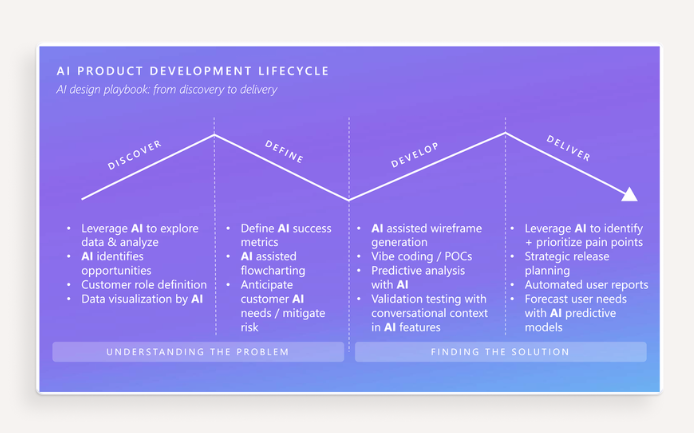
 Javy Wang - AI Product development lifecycle
-
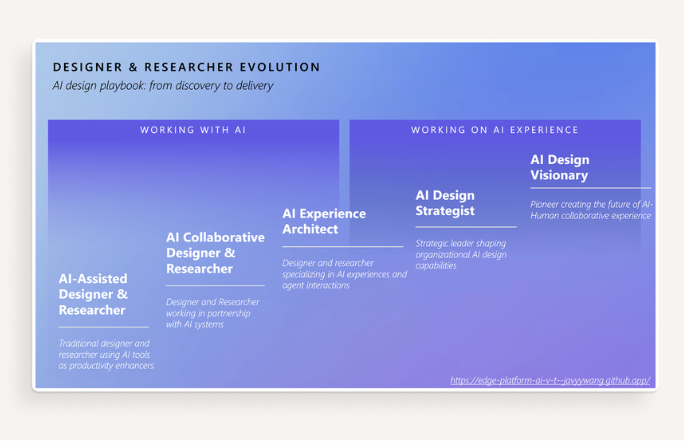
 Javy Wang - UX evolution
-
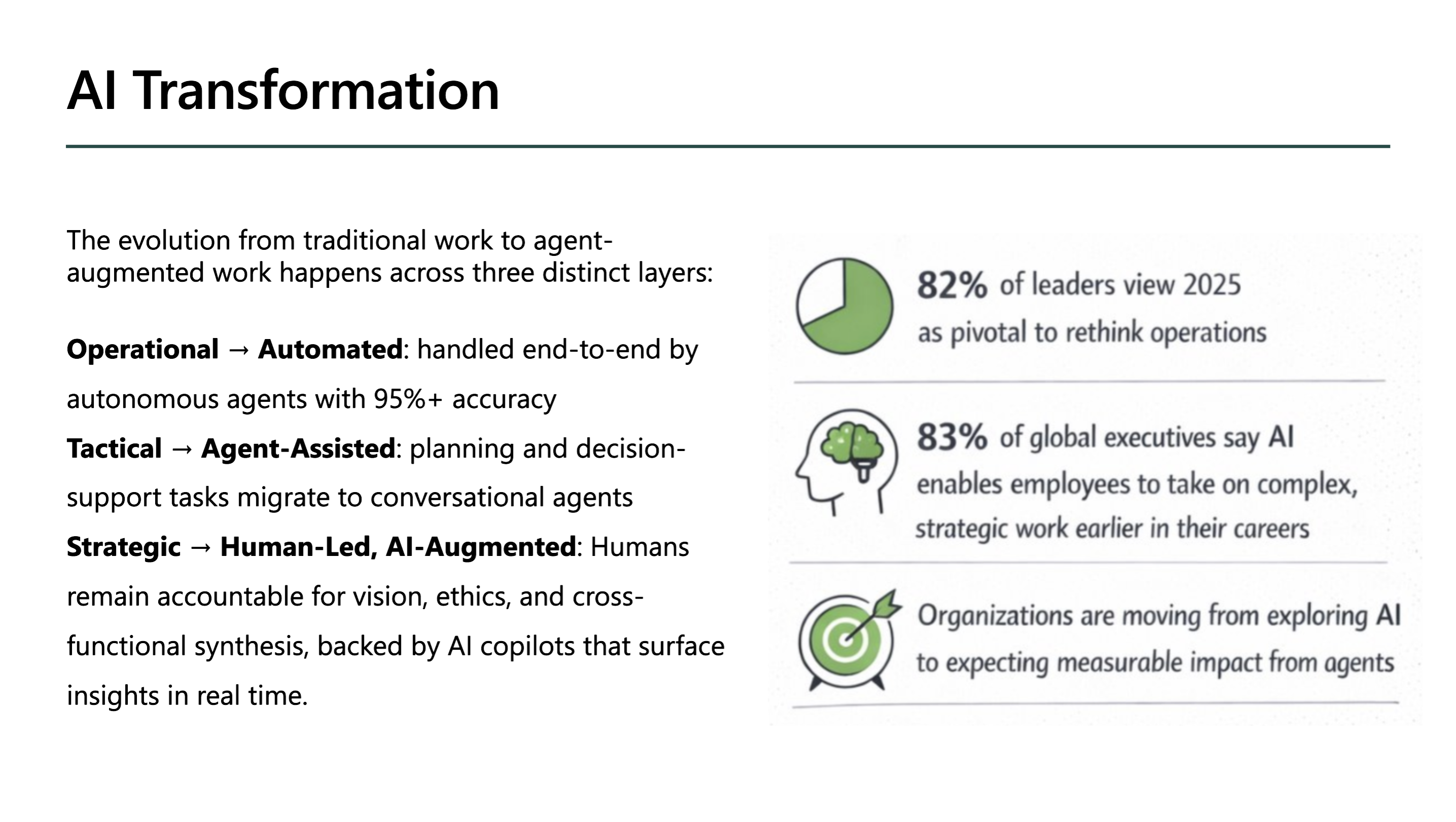 Javy Wang - AI transformation
-
-
Speech 2:Financial Design Transformation: AI Reshaping the New Ecosystem of Banking Services
Speaker:Chen Ming ( China Merchants Bank,Director of FTDesign)
In the digital age, AI is restructuring every link of financial services at the fundamental logical level. As a practitioner of this transformation, the speaker will draw on China Merchants Bank’s exploration of intelligent design systems. From three dimensions — technology empowerment, mindset reconstruction and capability reshaping — the speech will elaborate on how MUI (Multimodal Interaction) and iSEA (Intent-Sensing Interaction Architecture) build financial design capabilities adapted to the AI era.
1.Technology Empowerment: Shifting from Humans Adapting to Machines to Machines Understanding Humans
MUI delivers multi-dimensional upgrades to human-computer interaction, forming a full value chain covering demand analysis through outcome evaluation.
2.Mindset Reconstruction: From Function-Oriented Design to Intent & Emotion Recognition
The iSEA paradigm unlocks designers’ creative potential and redefines the core value of design.
3.Capability Reshaping: Designers as Curators and Gatekeepers of Intelligent Design Systems
Designers equipped with data and systematic thinking participate in decision-making at a higher strategic level.
While pursuing technological innovation, we remain anchored to the essence of design: innovation rooted in human-centric value.
Work Case-
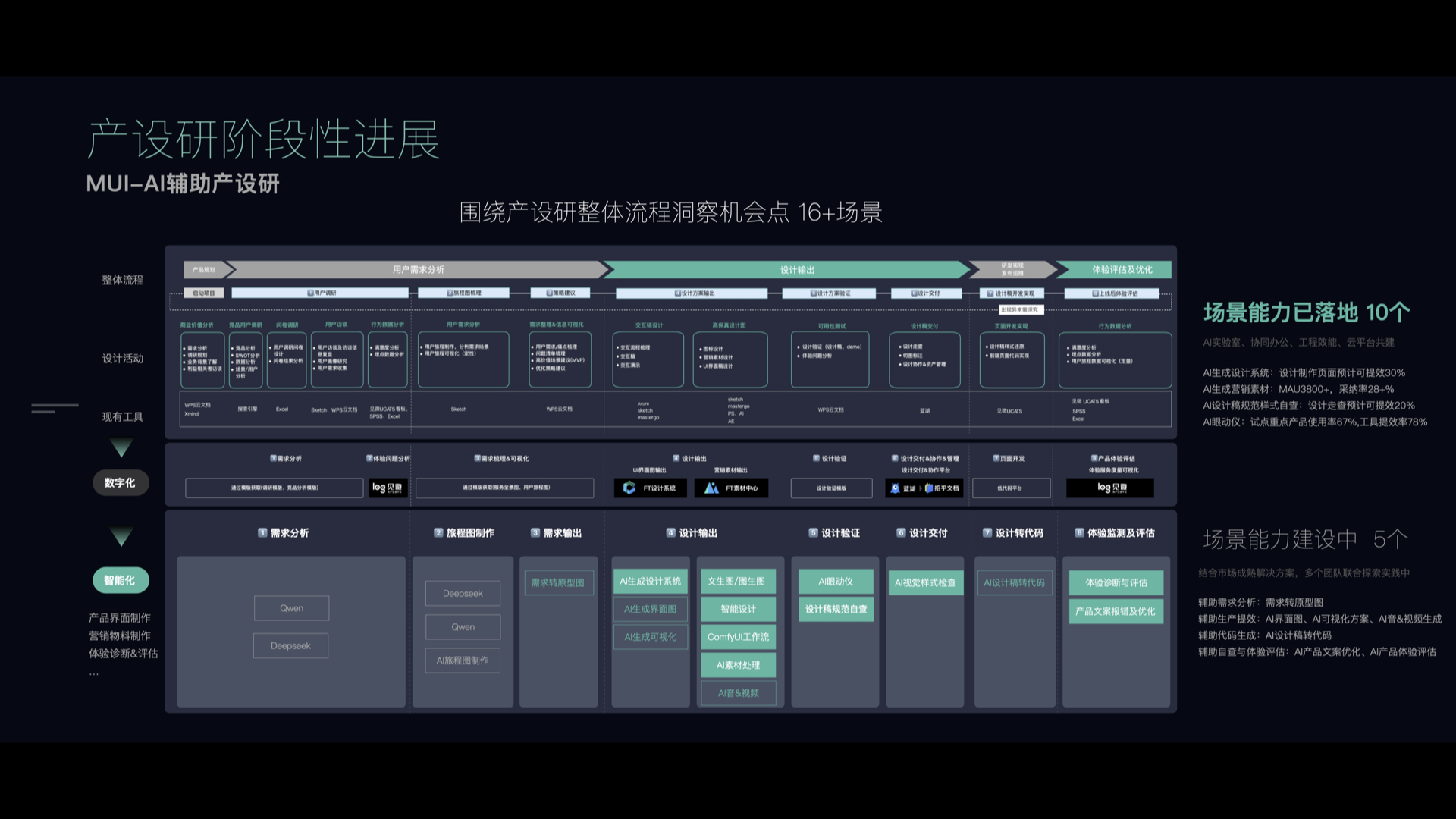 Chen Ming - Intelligent design systems cover the full design value chain end-to-end
-
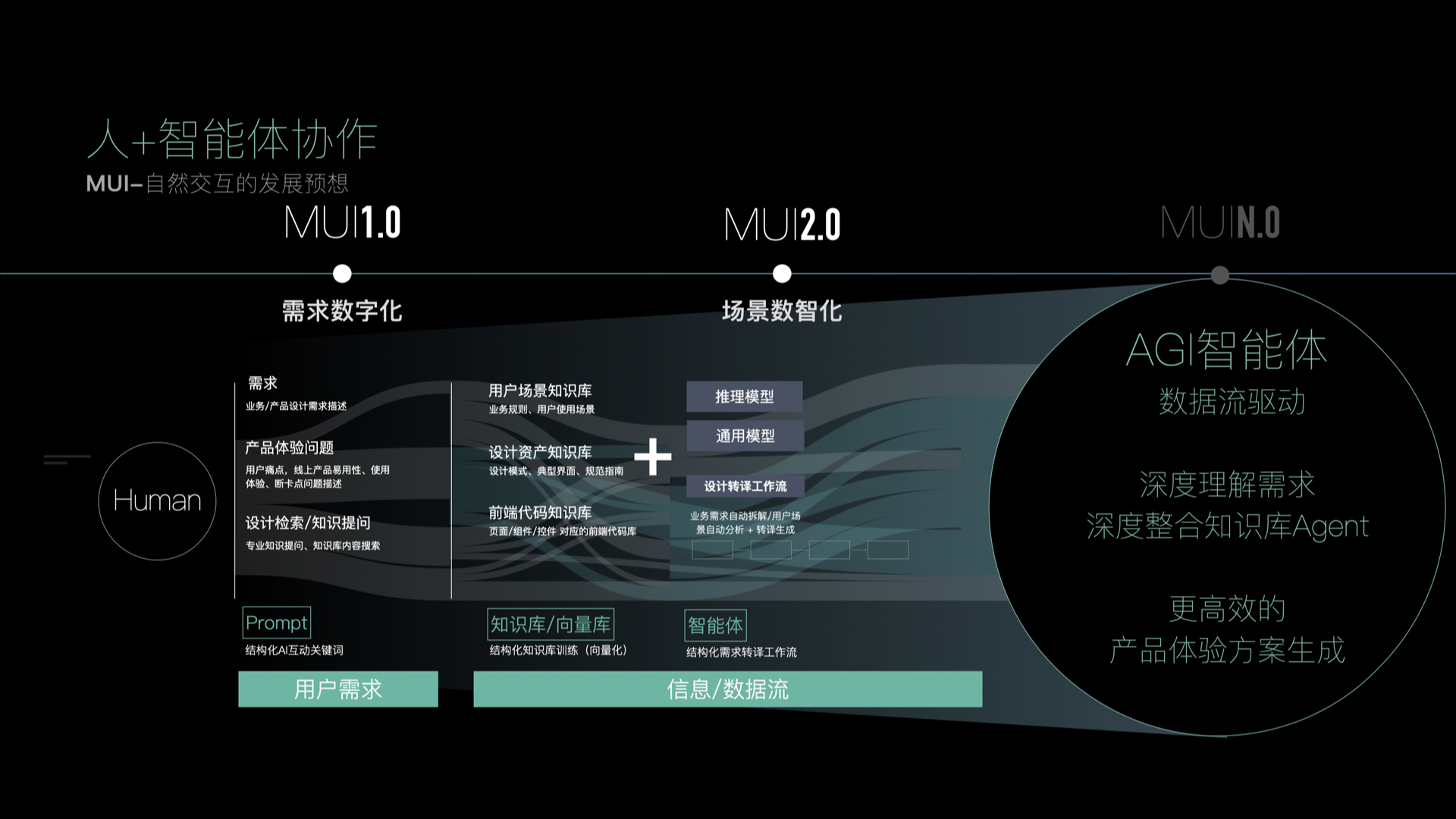 Chen Ming - Human & Agent Co-creation: Generative UI
-
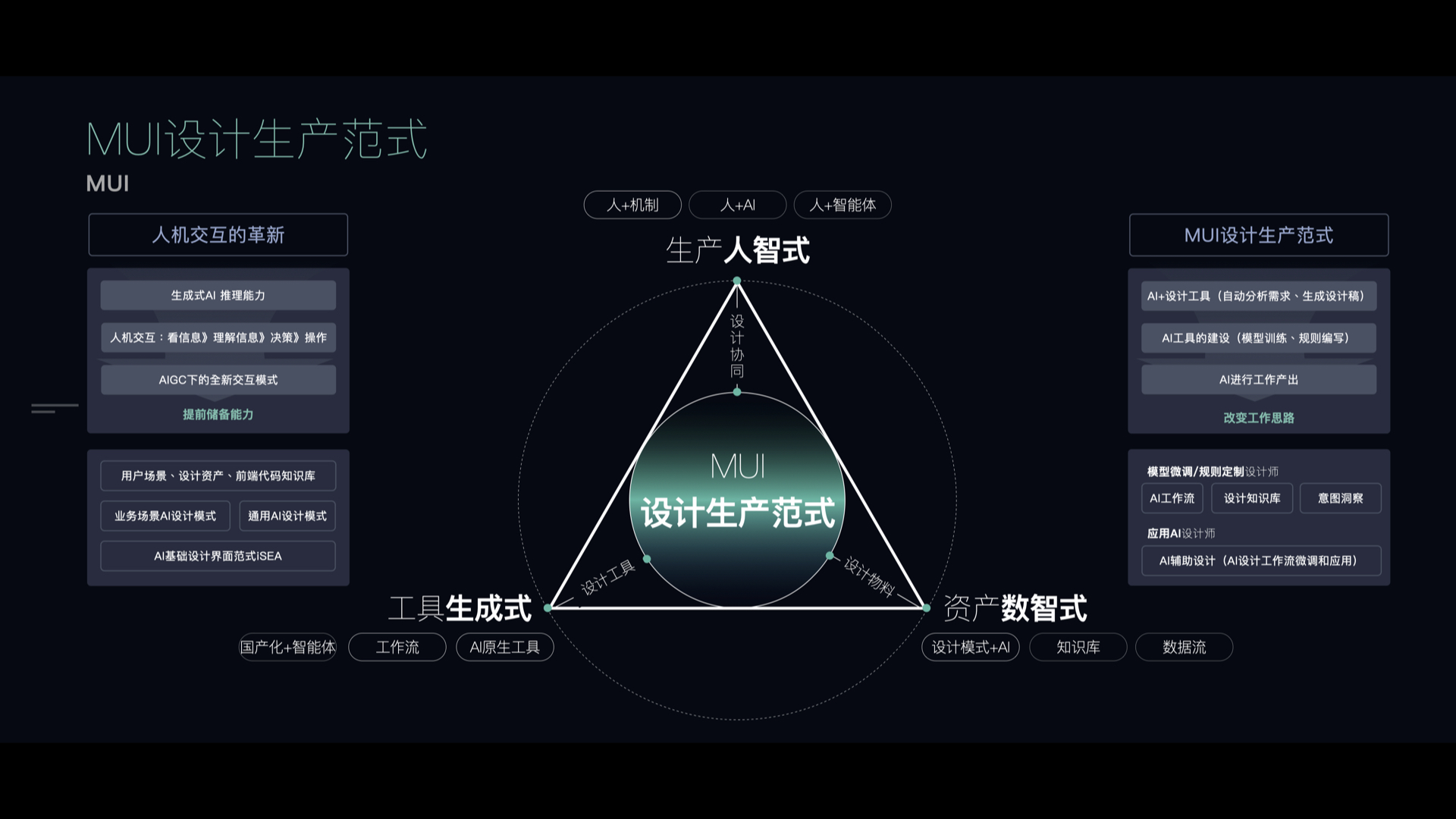 Chen Ming - MUI Design Production Paradigm
-
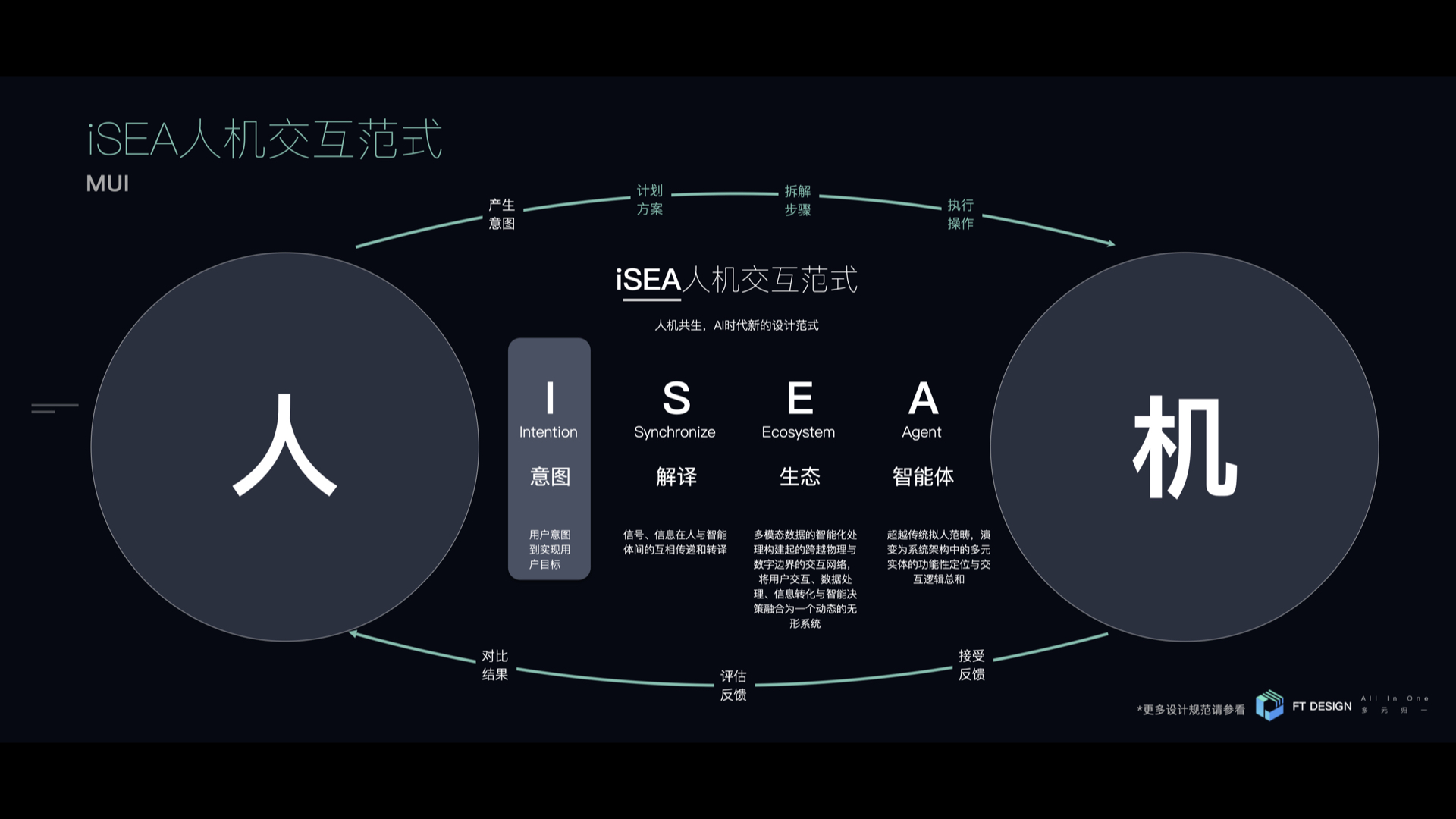 Chen Ming - iSEA Human-Agent Interaction Paradigm
-
-
Speech 3:From Delivery to Creation: Tencent Design Ardot's Practice in Product‑Design‑Engineering Collaboration
Speaker:Raina Su ( Tencent,Tencent Design Ardot Product Manager)
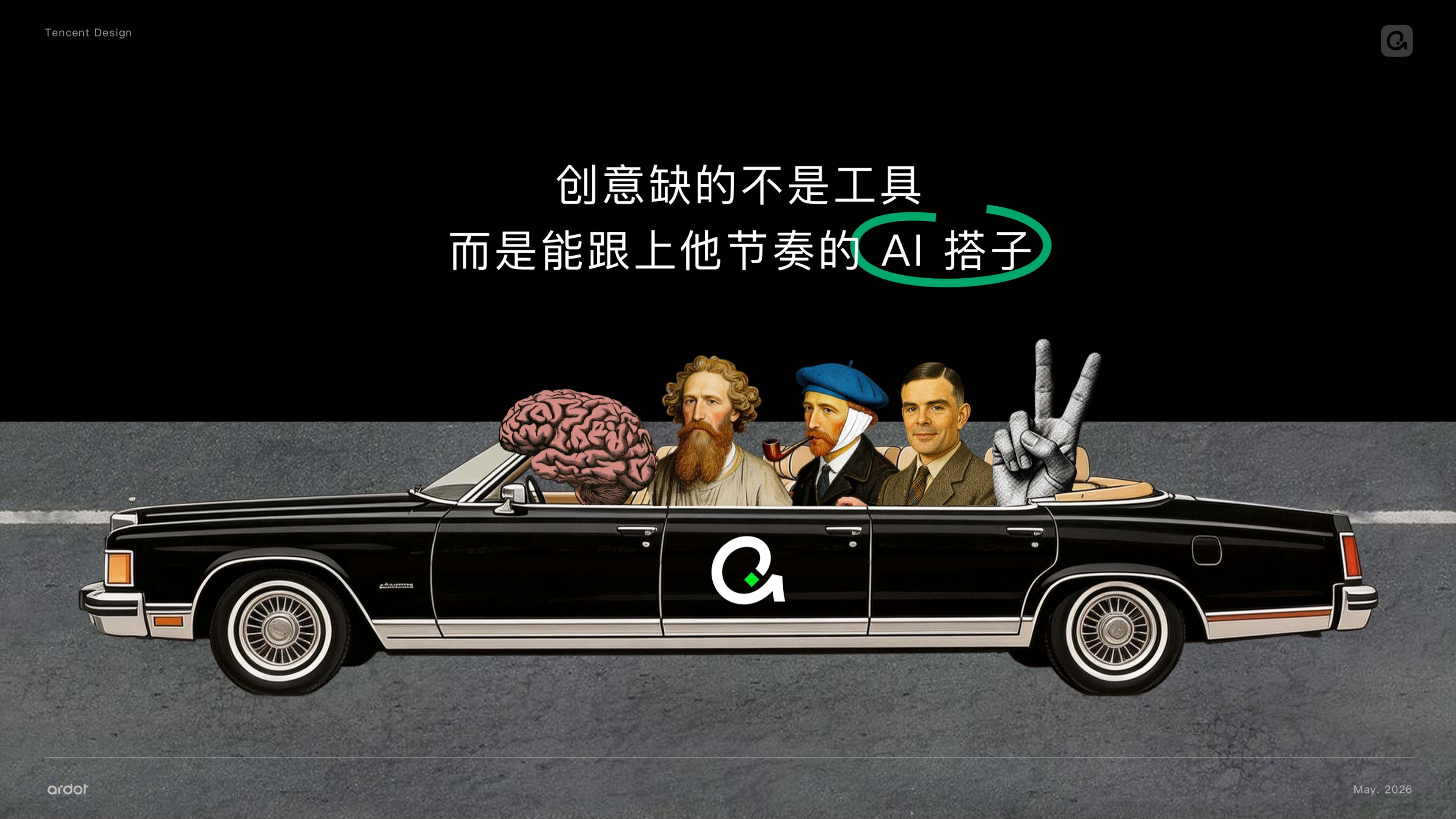
The most exhausting part of design isn't creativity – it's the last mile from design draft to code. Requirements get distorted through layers of handoff, solutions suffer from repeated rework, and product, design, and engineering teams spend much of their time on information transfer rather than creation itself.
Tencent Ardot is turning this possibility into reality: AI design avatars take over repetitive work, a multi-user canvas frees collaboration from screenshots and emails, design assets flow automatically, and design drafts go directly to code. As execution is handed over to AI, designers shift from executors pushed by process to rule‑makers who define how AI works, how humans and AI collaborate, and how the workflow should run.
This session uses Ardot's implementation as a case study to break down how this chain is being connected, how designers can sharpen their capabilities in the AI era, and how design teams can redefine their position.
Work Case -
-
Speech 4:How to Design a Better Ad Experiences
Speaker:Liu Xin ( Kuaishou,Senior AI Product Designer)
1. Topic Background:
AI is reshaping every aspect of digital advertising, with ad creative production undergoing the most fundamental transformation. The traditional linear process of “scripting → filming → post-production” is being by AI-driven end-to-end generation, compressing production cycles from days to minutes. However, in commercial scenarios, a technically impressive video ≠ a deployable ad creative. The latter must be tightly integrated with performance data, user profiles, compliance review, and brand safety—constituting a vast systemic project. This presentation will directly confront the core contradictions in commercializing AI, revealing how experience design can turn uncertain technological potential into certain revenue growth.
2.Presentation Content:
This talk will use Kwai’s “Cili Kaichuang” platform as a case study to systematically deconstruct how we drive growth for commercial AI through experience design. The content follows a three-tier progressive logic:
Identifying Contradictions: Analyzing Three Fundamental Conflicts in Commercializing AI
The volatility of technology vs. the stability required for experience
The generality of models vs. the precision of business demands
The probabilistic nature of generation vs. the usability required for delivery
These conflicts define the core design challenge: finding a dynamic “optimal experience balance point” on the shifting riverbed of technology.
Core Solutions: Sharing Three Key Design Approaches of “Cili Kaichuang”
2.1 Redefining What Constitutes Effective Commercial AI Creatives
Using “driving growth” as the benchmark, we deconstruct the creative production formula, build a creative asset system, and automate generation pipelines to redefine deployable creative standards—systematically transforming technological potential into revenue.
2.2 Designing Evolvable Human-AI Collaboration Relationships
We share how the platform systematically designs three modes—“Collaboration → Supervision → Delegation”—evolving with AI capabilities, smoothly transitioning users from “operators” to “decision-makers,” continuously lowering barriers to entry and scaling adoption.
2.3 Designing Structured Commercial Dialogue Mechanisms
Addressing the conflict between “vague natural language” and “precise business requirements,” we share how to turn “sentence-building” into “fill-in-the-blanks” through structured intent clarification, acting as a “business intent translator” to significantly enhance the usability and commercial value of AI output.
3.Conclusion and Outlook: Extracting Reusable Design Thinking and Future Directions
We will conclude that in the AI era, the essence of experience innovation shifts from “designing interfaces” to “designing production relationships.” The eternal mission of design is to leverage all technological means to enable users to clearly express intent, understand process states, and obtain effective outcomes—ultimately transforming design from a “support function” into a “growth engine.”
Work Case-
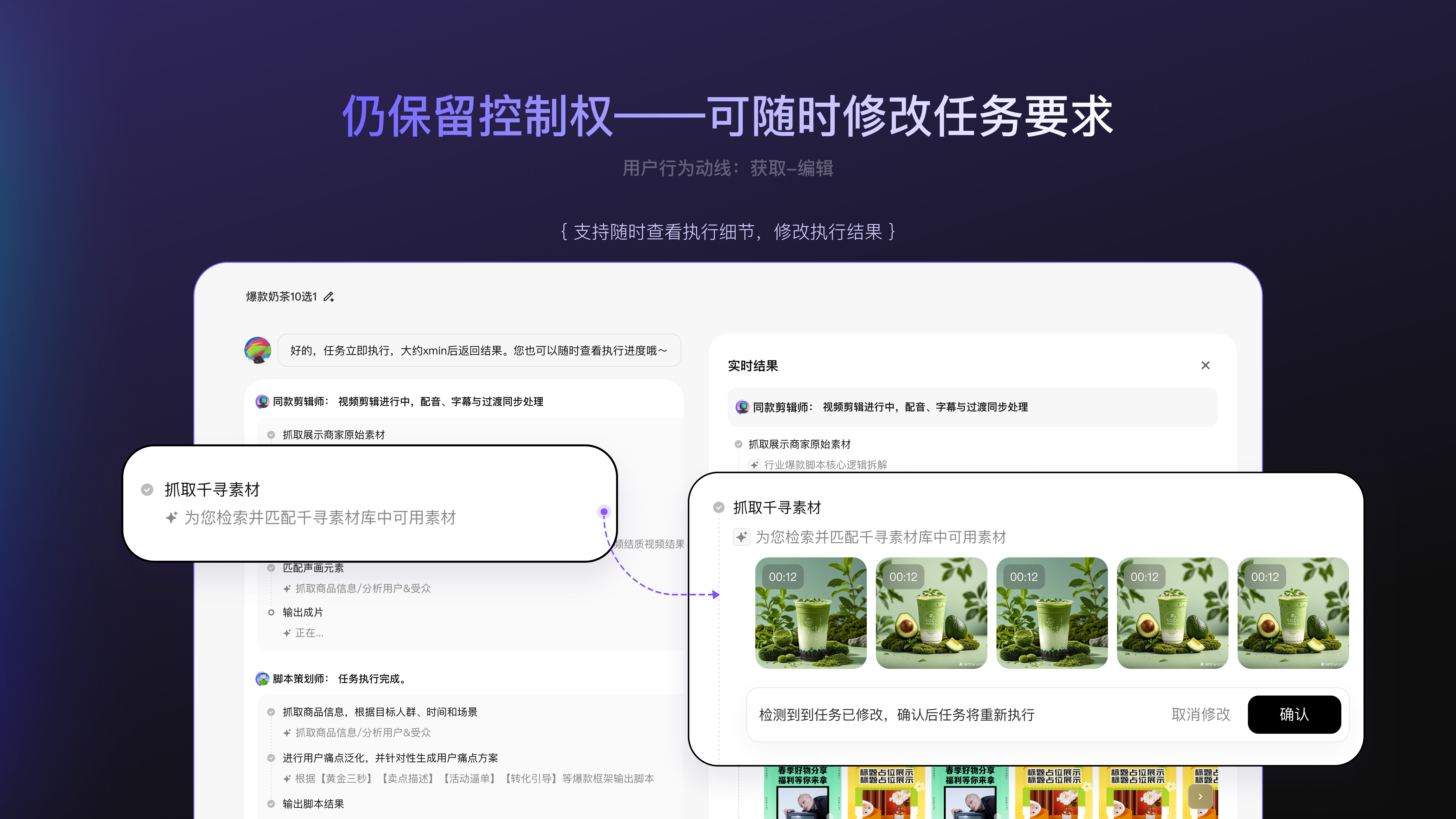 Liu Xin - agent design
-
 Liu Xin - agent design
-
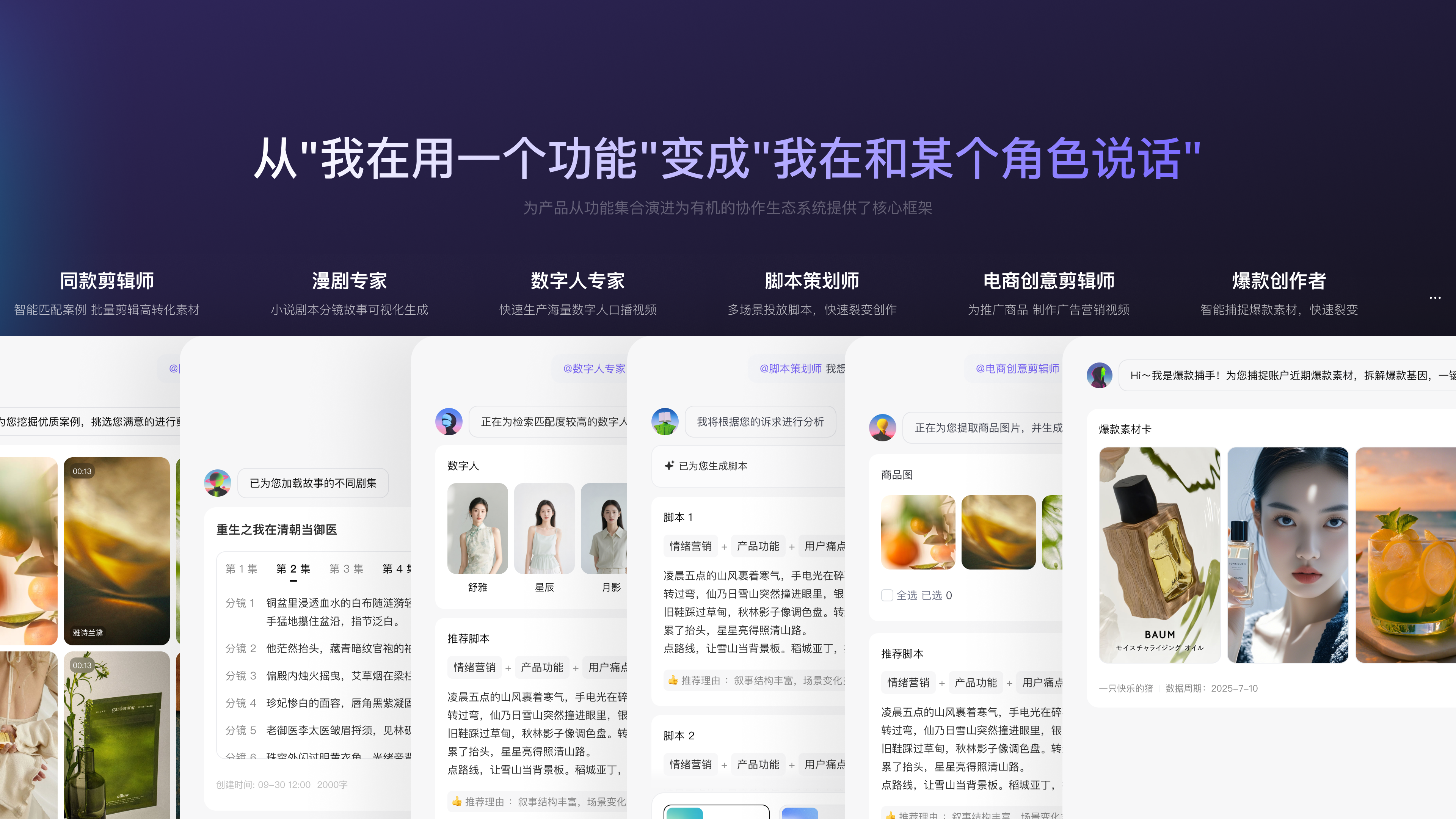 Liu Xin - Dialogue Design
-
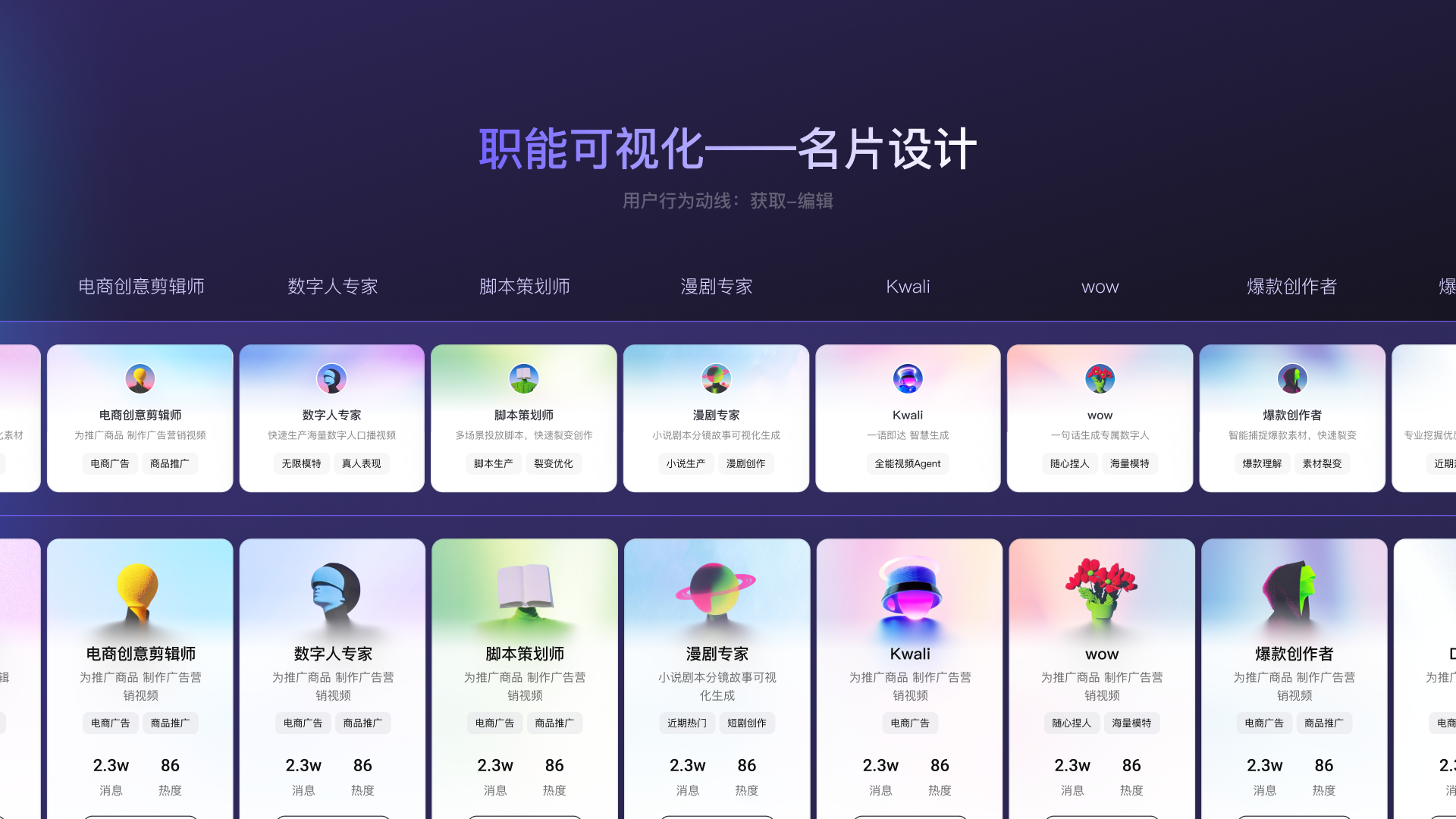 Liu Xin - The scene entry design of the agent family
-
-
Speech 5:Mechanical Uniformity to Organic Growth: Evolving Global Design for Human-AI Symbiosis
Speaker:Dai Quan ( Didi Chuxing,Senior Design Research Specialist)
Throughout the development of international products, design has long centered on "unification". Design standards were leveraged to boost efficiency, deliver consistent user experiences, strengthen brand recognition and support large-scale business expansion. However, with the integration of AI capabilities and increasingly diversified user demands, this paradigm built around rigid mechanical uniformity has revealed clear limitations. Products are no longer mere collections of functions; they interact with users with distinct personality, real-time feedback and unique brand temperament. This poses new challenges to internationalized design: designers now design far beyond interfaces and workflows — they shape how products build genuine connections with users across diverse cultural contexts.
Drawing on Didi’s international design practices and first-hand insights from global regional markets, this talk explores how cross-border design evolves from mechanical uniformity to organic growth. It illustrates the shift from static design language to dynamic design systems that evolve continuously to adapt to varied local environments. Covering design systems, user insights and cross-cultural collaboration, the session addresses a core question: Faced with complex cultural differences and AI-powered intelligent products, how can we build global user experiences that balance operational efficiency and human warmth?
Key takeaways include:
1.A review of design’s shifting role in globalization and emerging challenges brought by the AI era
2.How to craft user experiences that resonate and win preference across cultures, rather than merely meeting basic acceptance standards
3.Strategies to build design systems that preserve unified operational efficiency while supporting dynamic iteration, enabling deeper human-AI connections
Work Case-
 Dai Quan - JP Visuals
-
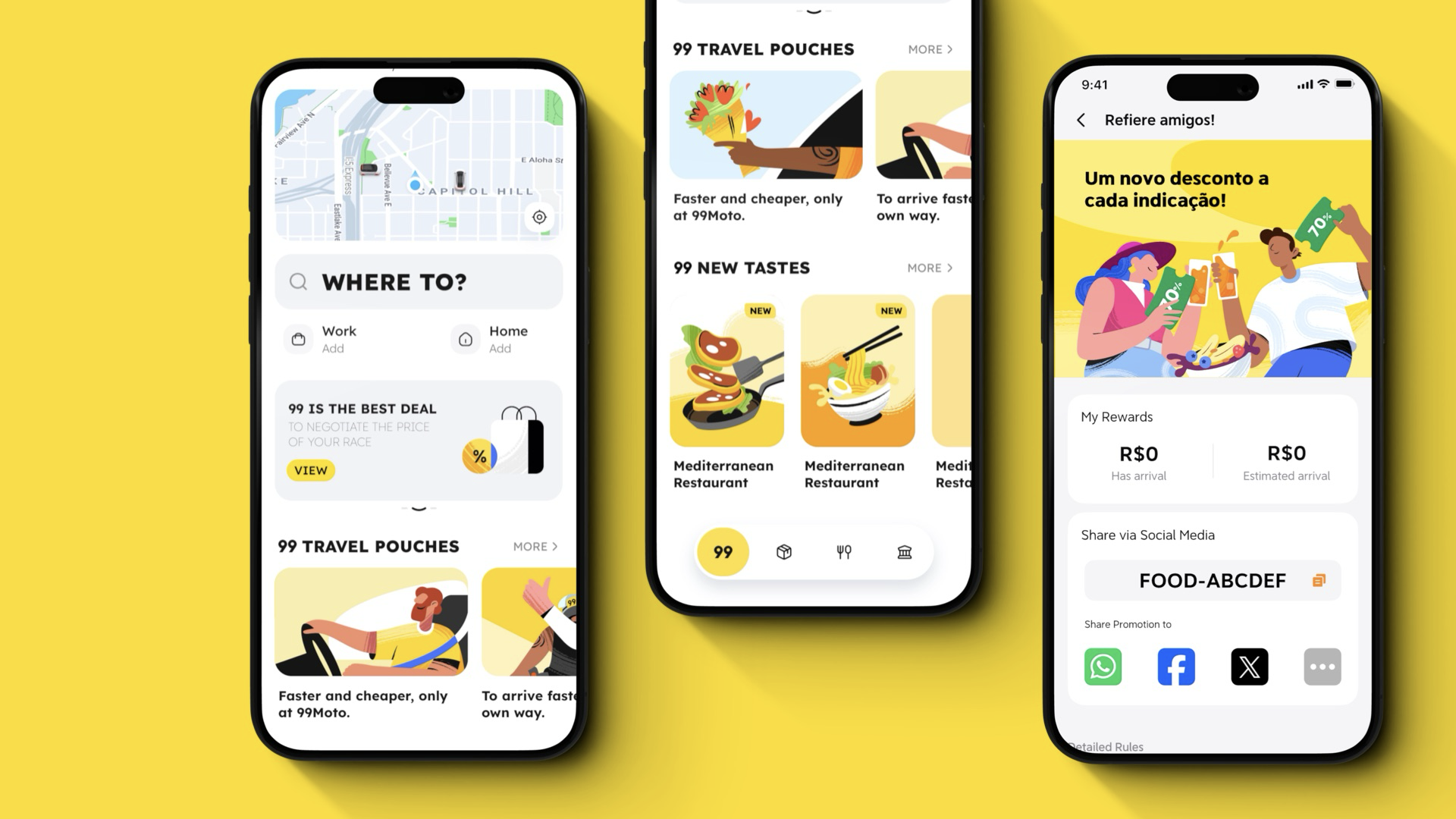 Dai Quan - BR App Design
-
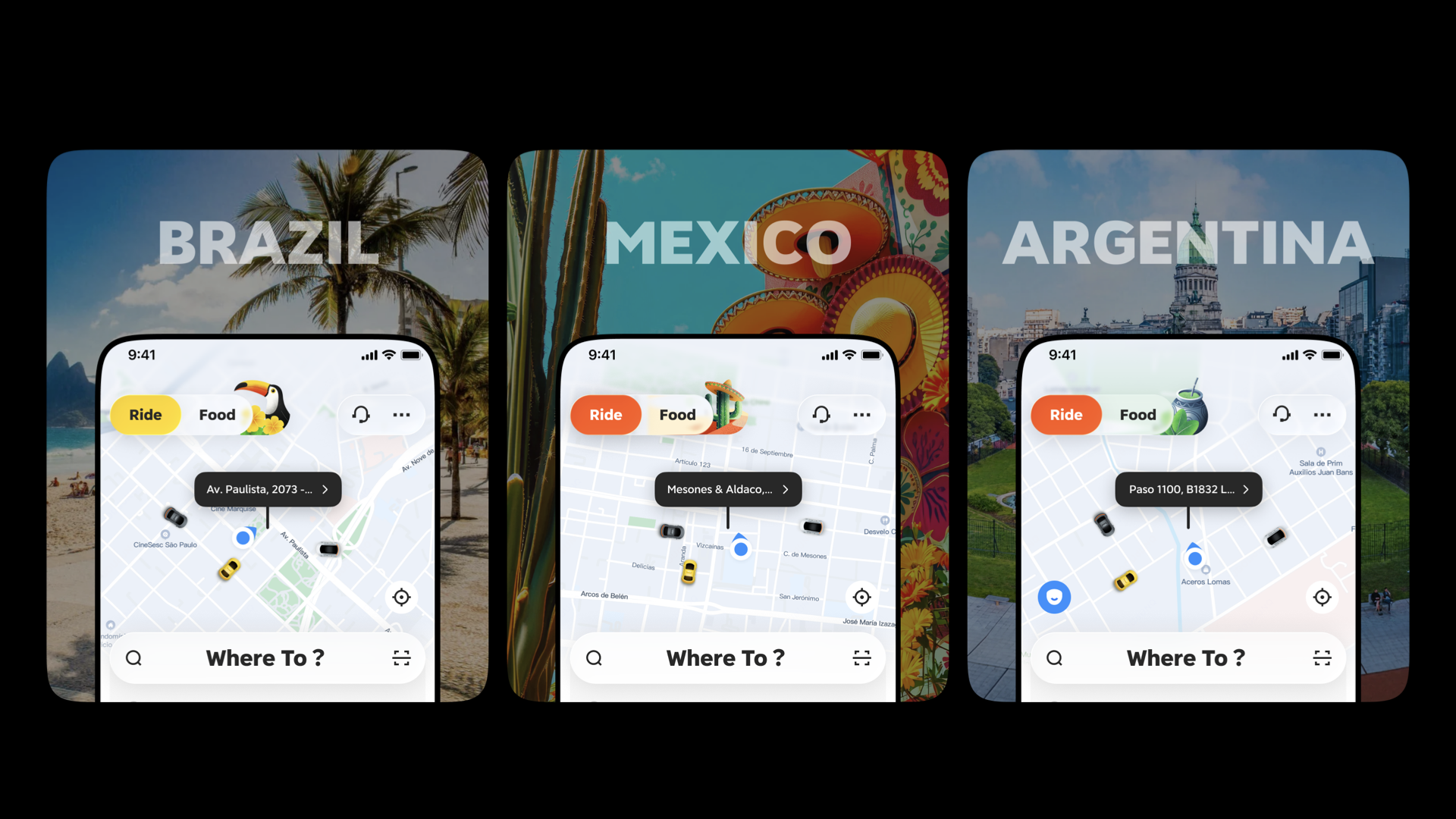 Dai Quan - LATAM Design Concept
-
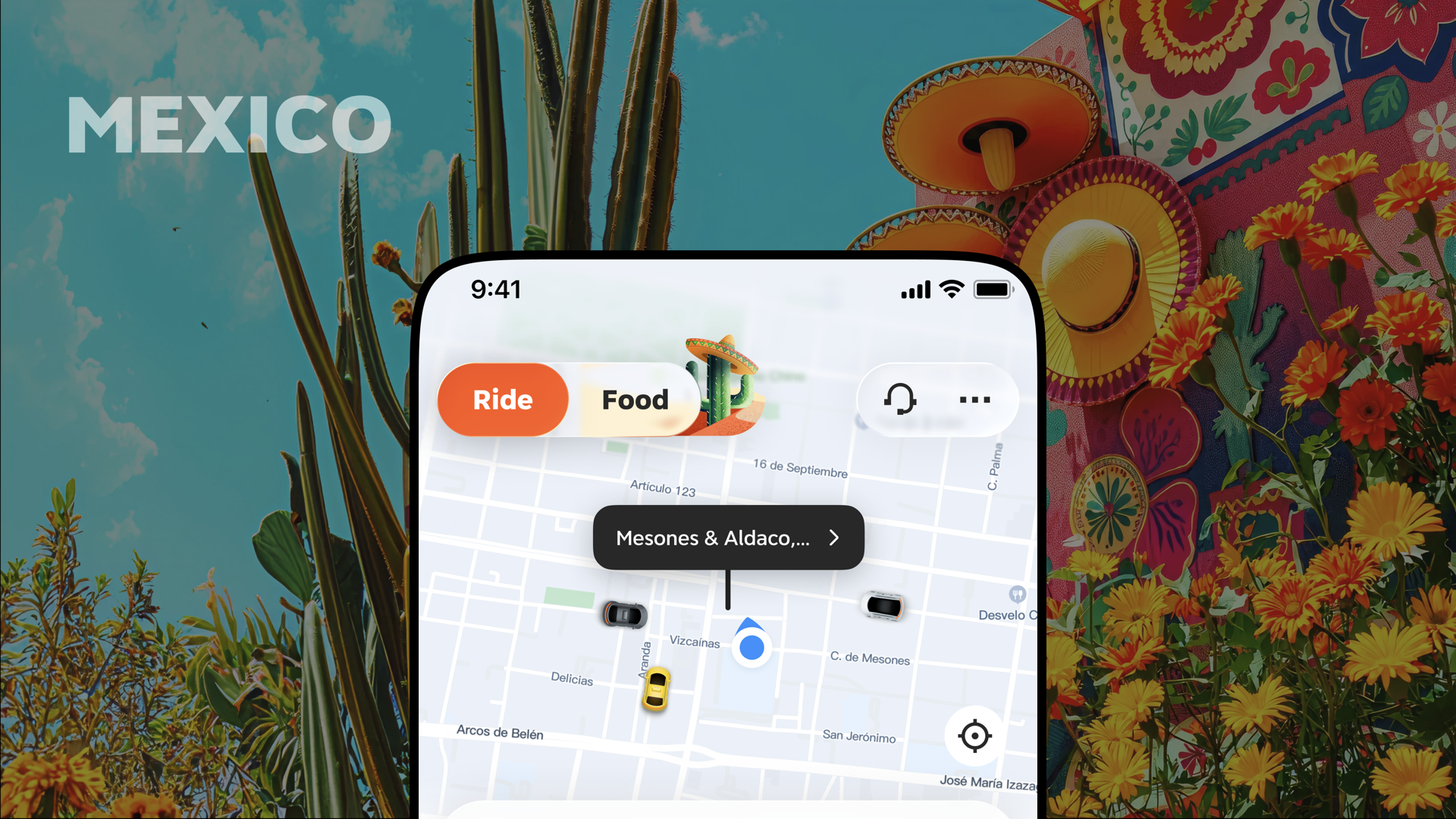 Dai Quan - Mexico Design Concept
-
-
Speech 6:AI Reconstructs Design Collaboration Chain — Pixso AI Intelligent Editing Practices
Speaker:Li Fang ( Pixso,Product Lead)
In product design delivery practices, cross-platform adaptation, high-frequency iteration and standardized collaboration are common bottlenecks that slow down workflows. Combining practical implementation experience of Pixso AI capabilities, this speech illustrates how intelligent editing technology integrates into core stages including interface design, content modification and R&D handoff. It aims to unlock team productivity and allow teams to refocus on pure creation.
Agenda
1. Three major efficiency pain points hindering product-R&D collaboration
2. Pixso product positioning and full overview of core intelligent editing capabilities
3. Comprehensive showcase of AI automation across key stages: interface layout, batch content revision and R&D handoff — Pixso AI intelligent editing features
4. Real-world lessons learned from practice
Work Case-
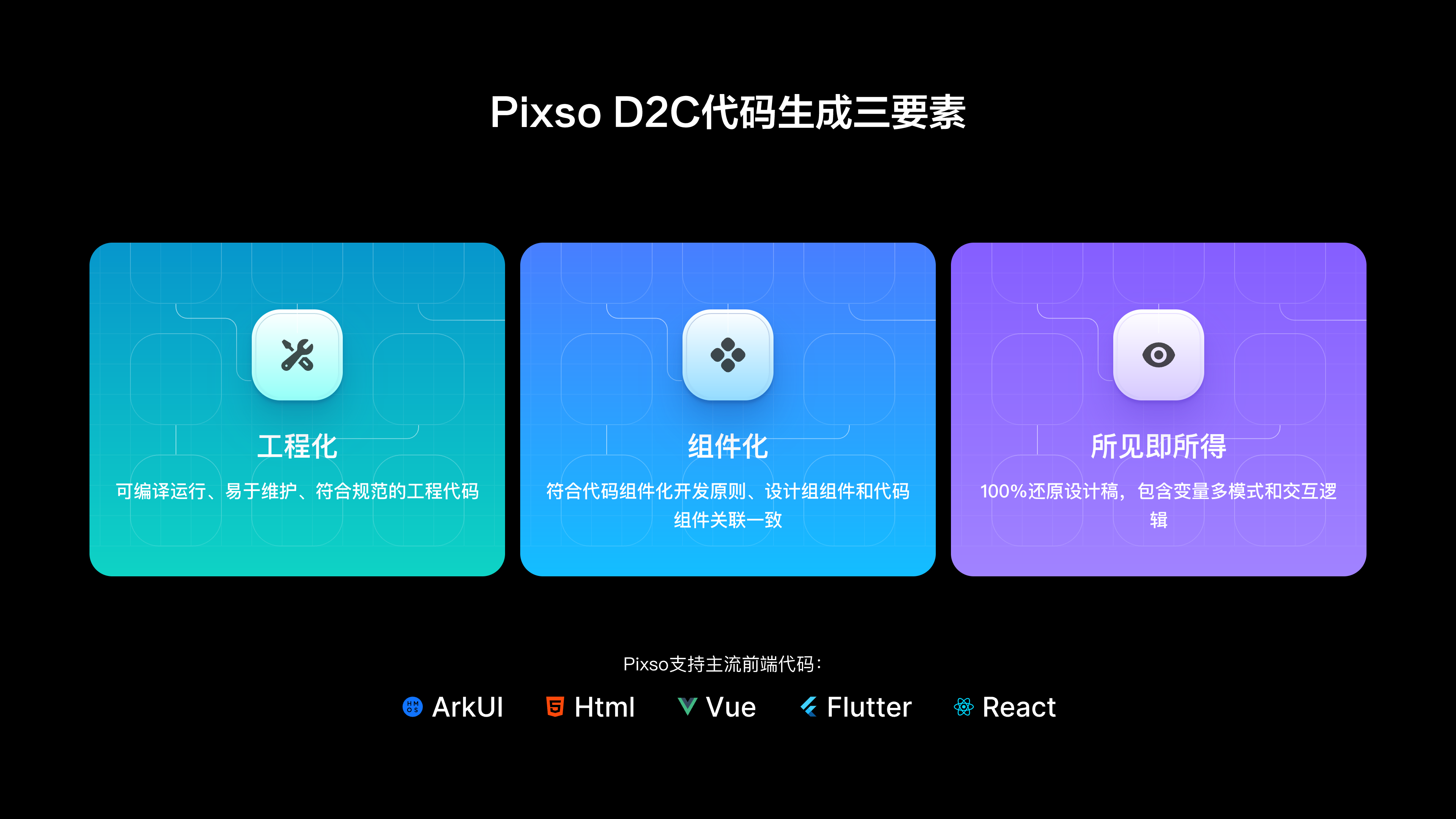 Li Fang - Pixso D2C Code Generation
-
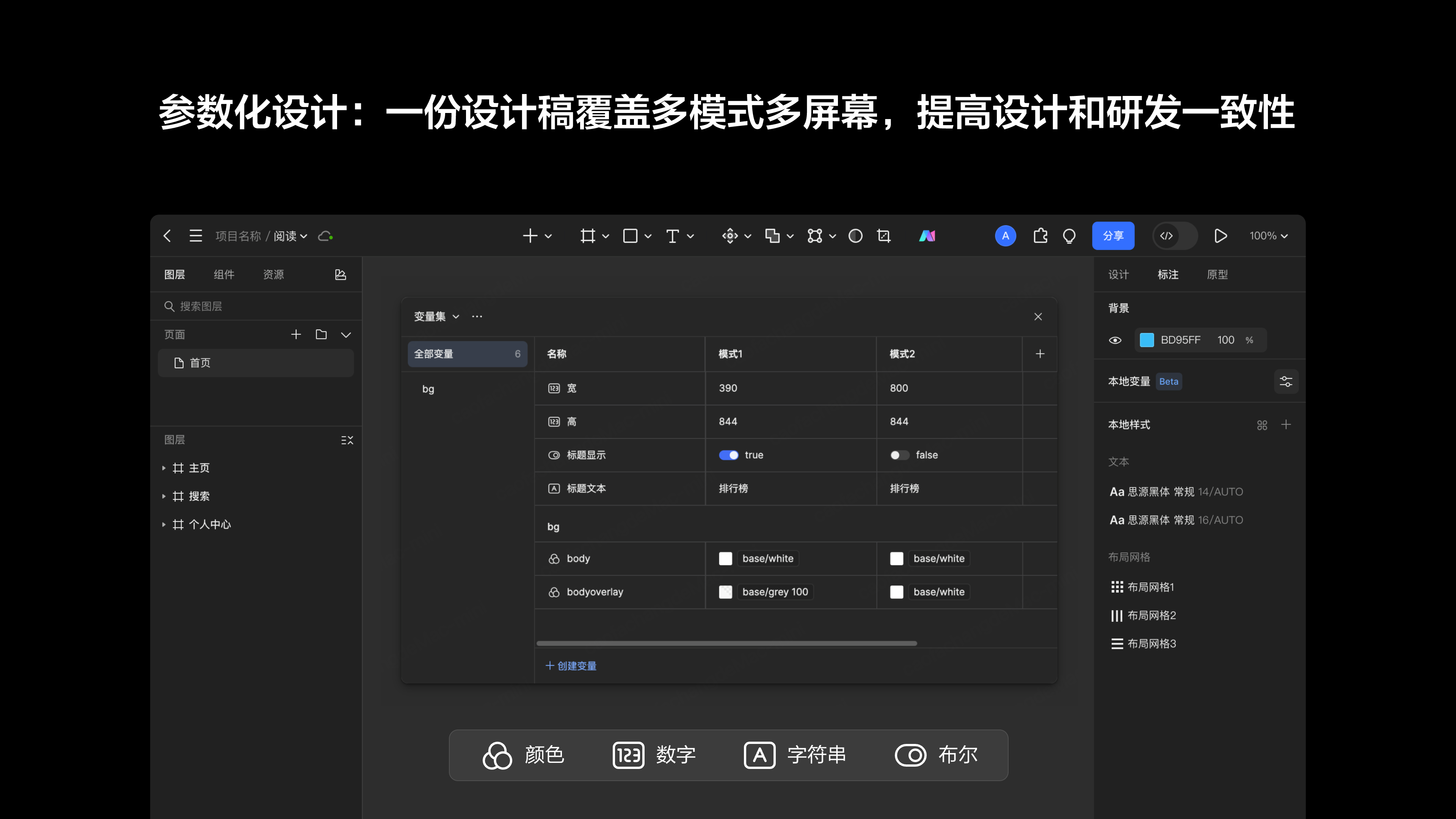 Li Fang - Design Specification
-
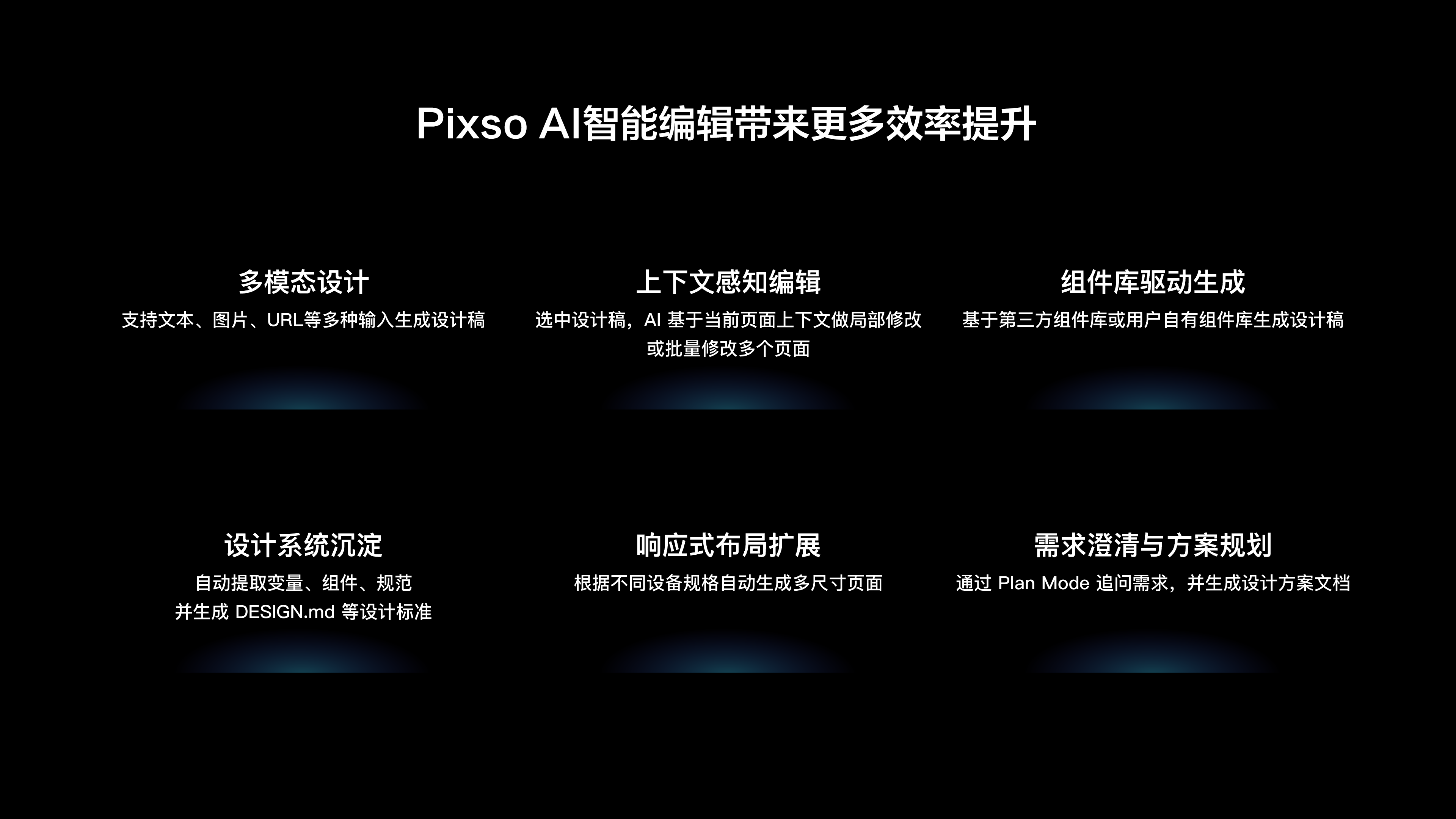 Li Fang - Smart editing brings higher productivity.
-
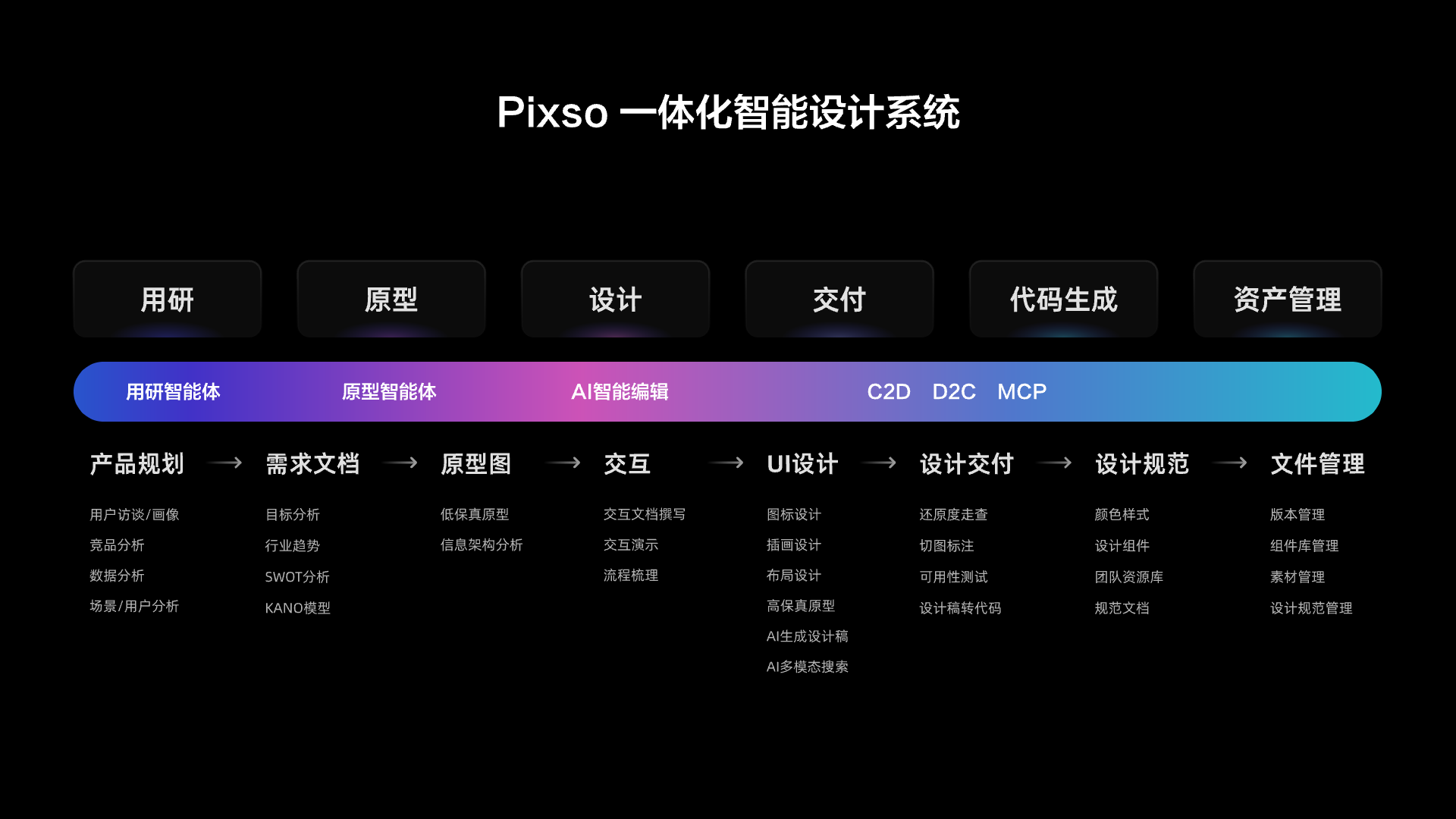 Li Fang - Pixso Integrated Smart Design System
-
-
Speech 7:AI Coding Beyond Conversations — Scale LLMs for Enterprise Team Development
Speaker:Wang Chuanhai ( Qihoo 360,Technical Director)
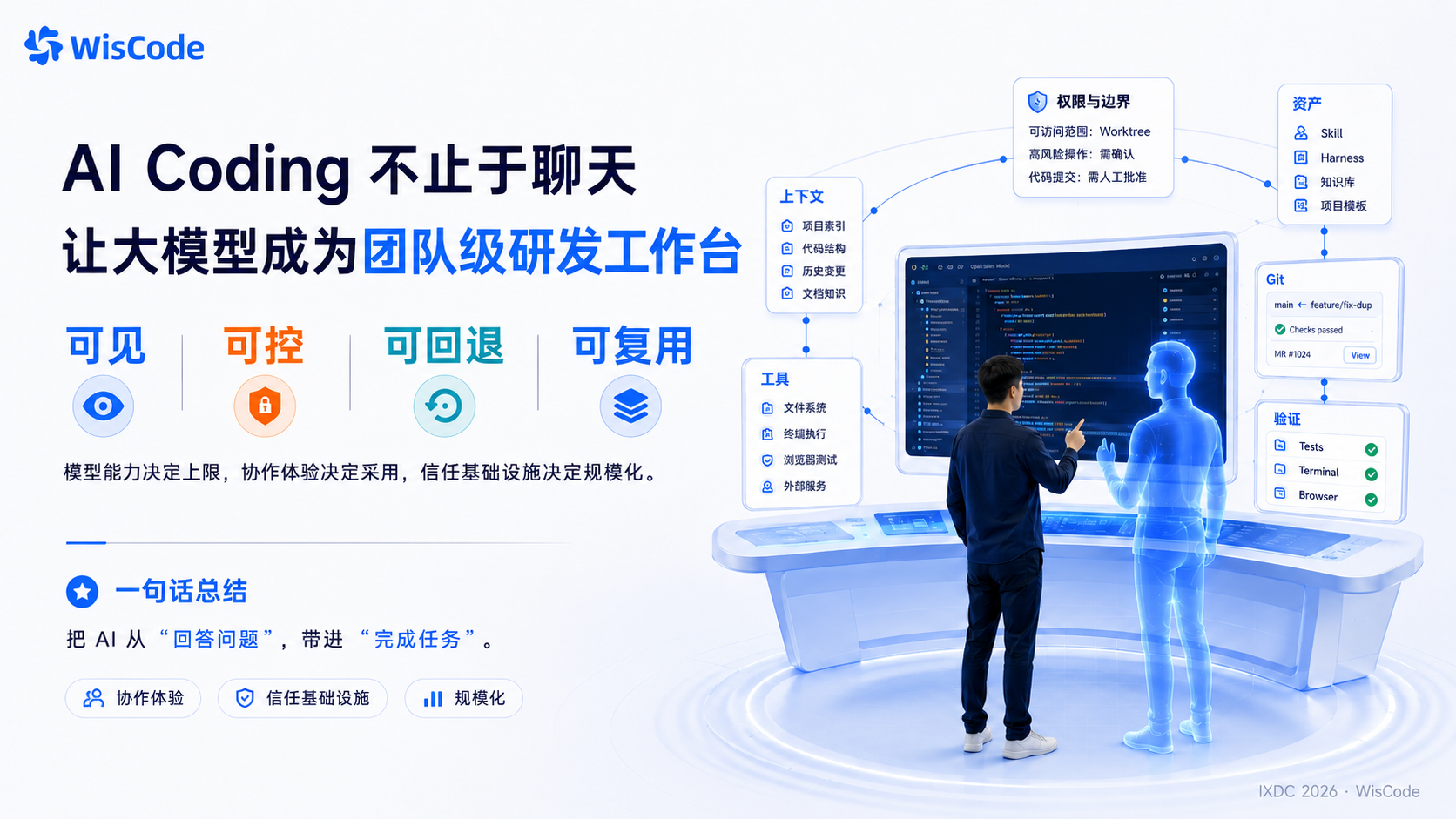
The speed of AI code generation is self-evident and no longer needs further proof. Yet in real enterprise R&D scenarios, the real challenge has never been whether AI can write code. Instead, the critical questions lie elsewhere: Can AI grasp full project context? Can it comply with team coding standards? Can it integrate with existing development toolchains? Can it form a trustworthy closed loop covering files, terminals, Git, browsers, permission approvals, code rollbacks and quality gates? Without these capabilities, AI Coding remains nothing more than an extension of chat interactions and can hardly be fully integrated into enterprise development pipelines.
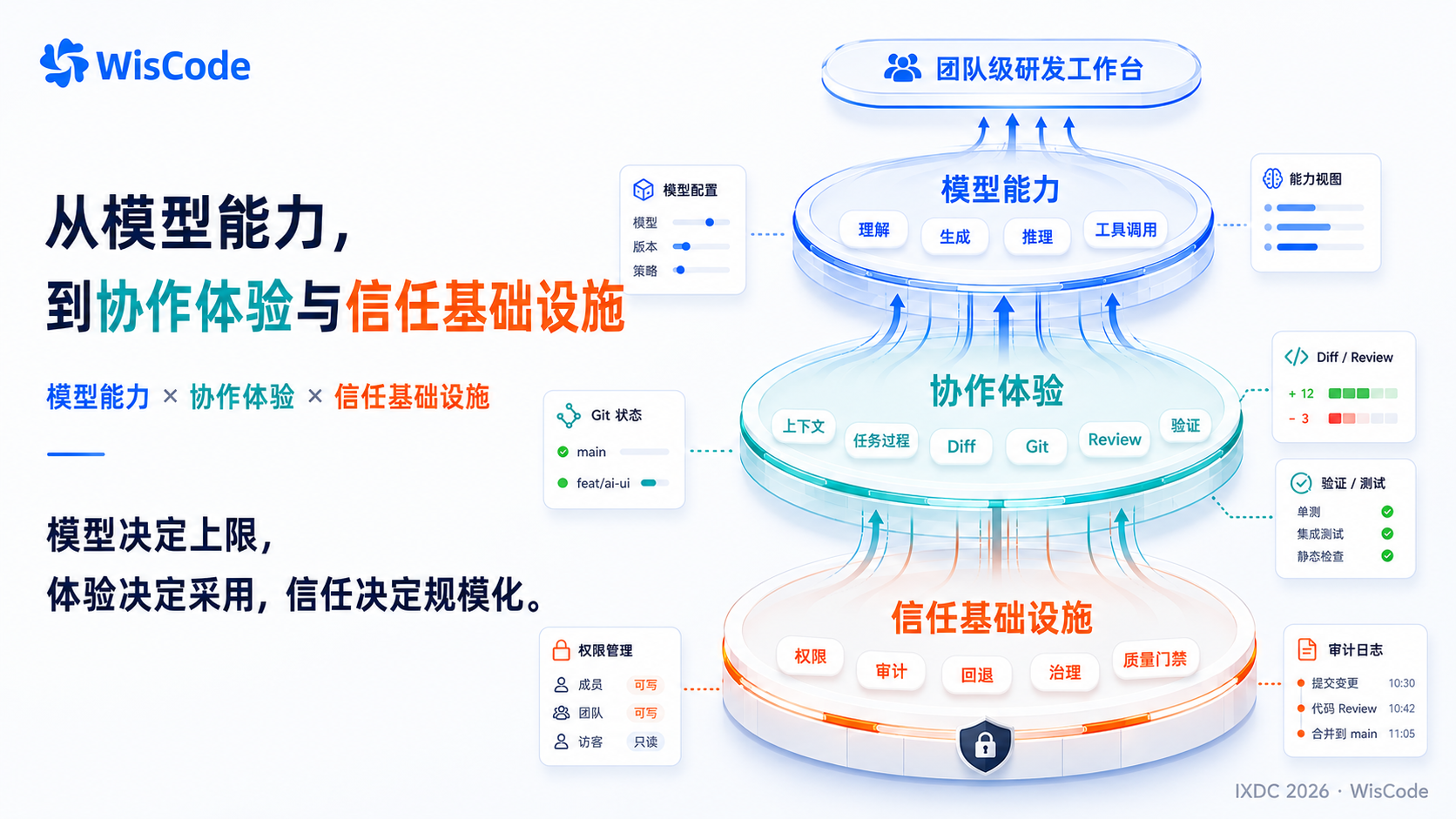
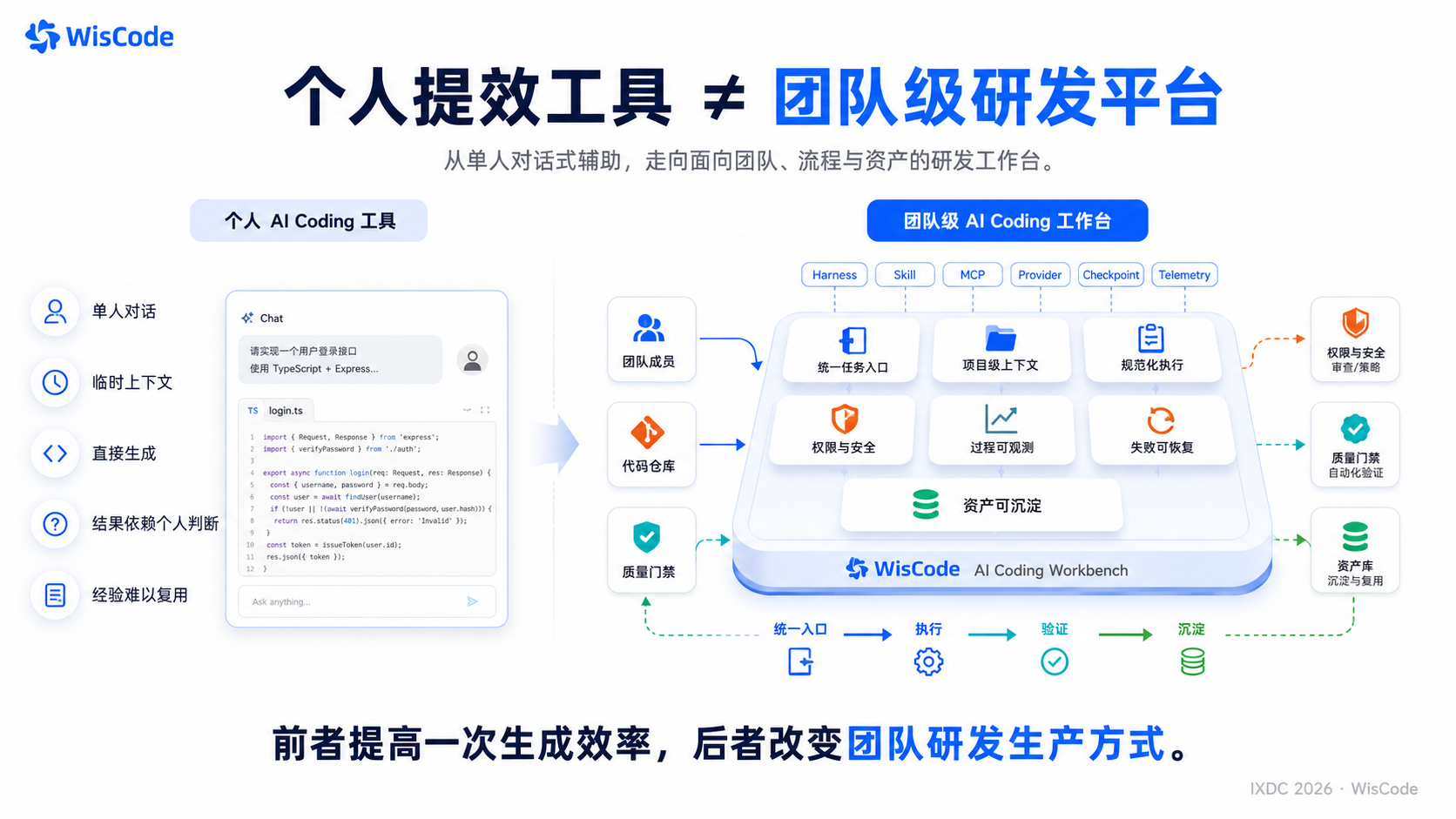
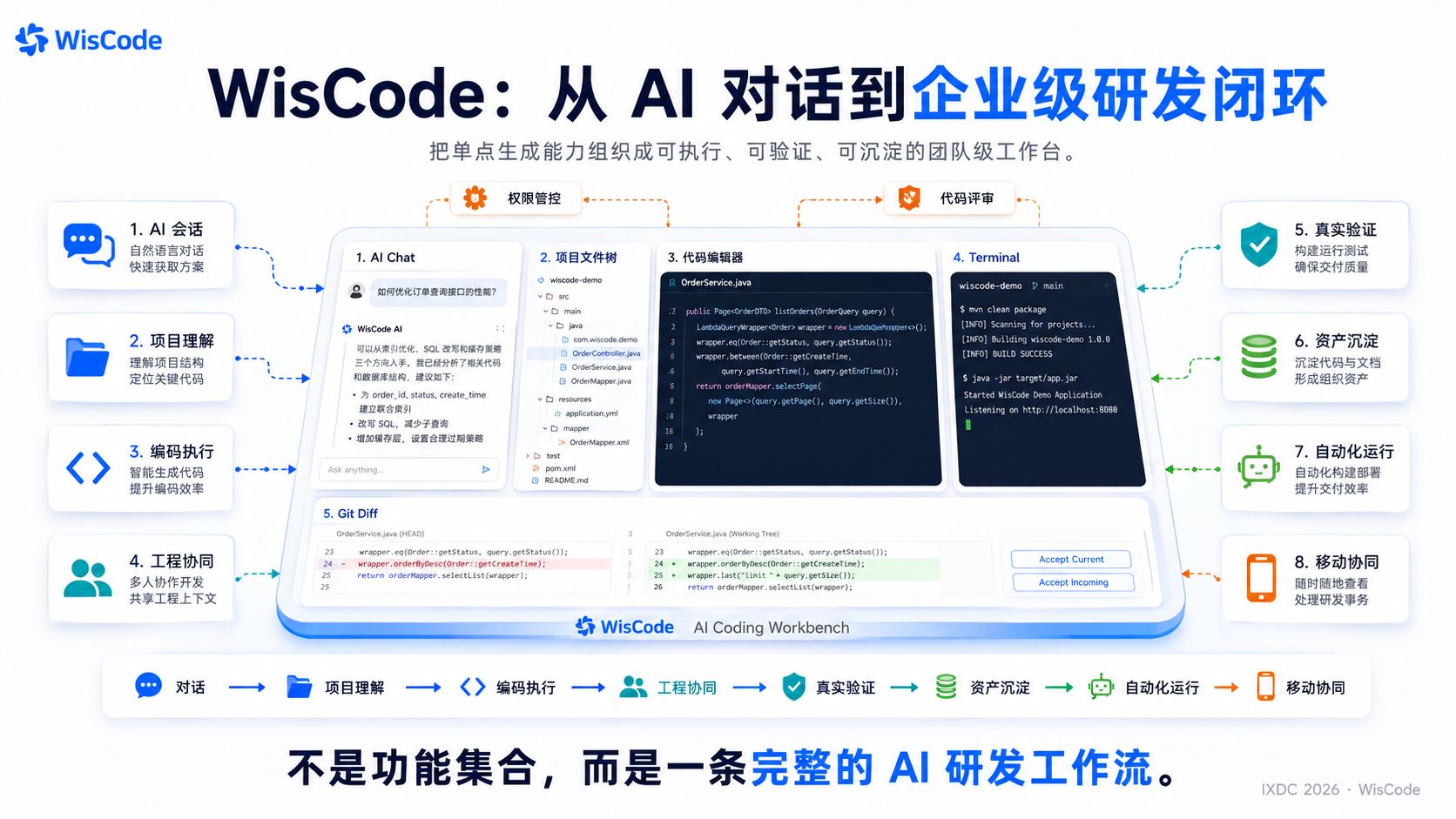
This talk draws on real-world practices of the WisCode product to break down how we evolved a simple chat-and-code-generation AI assistant into a team-wide R&D workbench. The core goal is to make Agent execution visible, controllable, rollbackable and reusable — covering the full workflow from task initiation, context parsing and tool invocation, to permission verification, code diff display, failure recovery, Git collaboration and continuous delivery. The sharing centers around three core topics:
1.Why AI Coding products cannot stop at basic chat and code generation. We unpack the fundamental differences between personal efficiency tools and enterprise-grade team R&D platforms.
2.How to design collaborative experiences for AI Agents. This includes task triggering, context loading, tool calling, permission confirmation, code change visualization, error recovery, Git teamwork and continuous delivery.
3.How teams scale AI’s value from individual developers to the entire organization. We cover the precipitation of reusable Skills, Harnesses, engineering specifications and data metrics, enabling AI to participate not only in code writing, but also cross-team collaboration, engineering governance and continuous delivery.
If you are building AI development tools or exploring ways to embed AI deeply into R&D workflows, this session will deliver actionable methodologies: how to design an AI Coding workbench trusted by engineering teams, and how to translate large model capabilities into reusable, measurable and scalable enterprise R&D productivity.
Work Case -
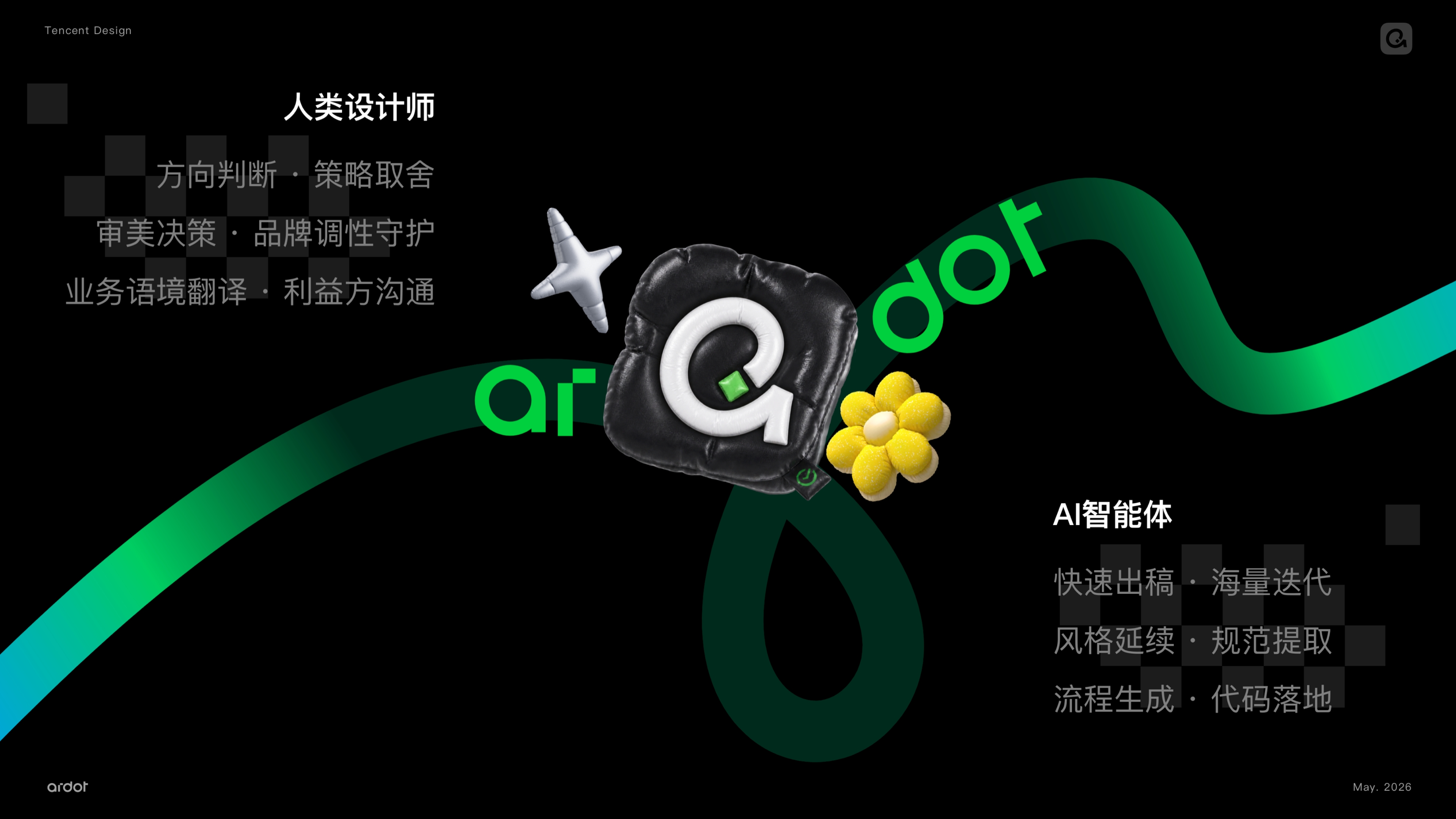

1.Strategic decision-makers including enterprise CEOs, CTOs and CDOs
2.Product Directors and AI Product Managers
3.UX specialists and Design Directors
4.Practitioners in technology services, software & information services, and supply chain finance
5.Officials and researchers from government institutions focusing on the digital-intelligent transformation of the service industry
1.Upgraded Strategic Cognition
Understand the evolutionary logic of AI shifting from a "tool" to a "collaborative partner"; master the three-layer competition framework of "Model - Experience - Trust"; and grasp the underlying rules that determine product success or failure in the AI era.
2.Practical Implementation Methodologies
Gain first-hand design strategies and real-world implementation cases from flagship products including China Merchants Bank’s MUI & iSEA, Google NotebookLM, Kuaishou Magical Creator, and Didi’s international design system.
3.Reusable Measurement Tools
Learn a six-dimensional experience indicator system tailored for the Agent era, which converts subjective concepts such as empathy and trust into quantifiable, manageable business metrics.
4.Cost Reduction, Efficiency Boost & Growth Roadmap
Explore how AI design systems cut R&D costs and streamline service workflows via human-AI collaboration; master commercial design practices that directly translate AI technology into revenue growth.
5.Organizational & Talent Transformation Framework
Clarify the capability upgrade path for designers and product managers in the AI era (e.g., shifting from "executors" to "curators"), and obtain a clear blueprint for building AI-ready teams within enterprises.